

Stationery items budget spend quietly grows in many companies, as simple daily purchases turn into a costly line item due to random buying, multiple suppliers, and a lack of planning.
In Saudi Arabia’s business environment, and with the increasing focus on operational efficiency and cost control, it has become necessary to rethink how stationery is purchased and managed in a smarter way.
In this article, we review how companies can save up to 30% of their stationery budget without affecting work quality or employee comfort, through practical strategies in planning, purchasing, and follow-up.
We also explain how Lawazem helps companies apply these strategies easily, turning stationery from a recurring financial burden into a clearly managed, efficient spend category. Keep reading!
Common Causes of Waste in Office Stationery Budgets
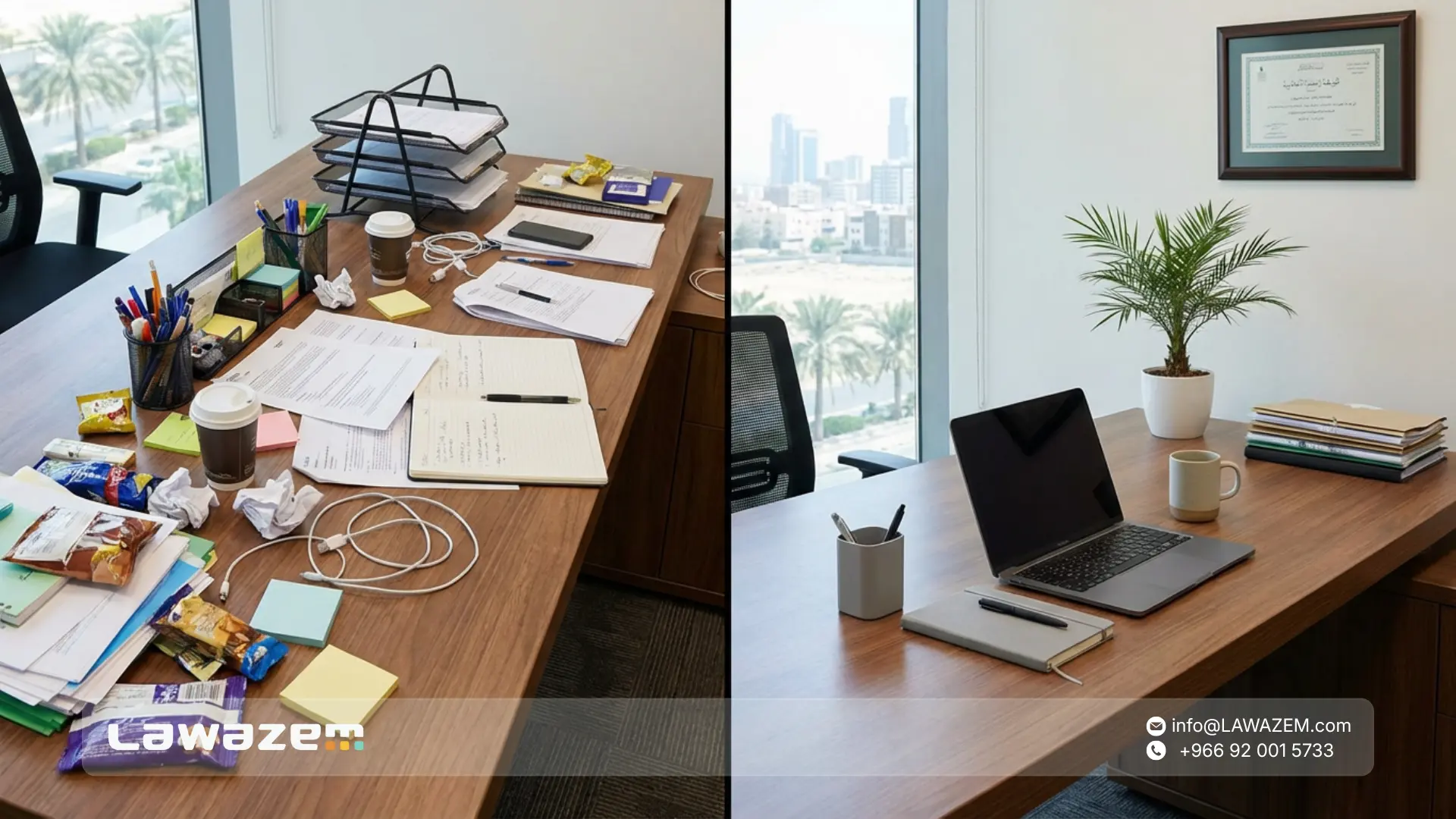
Although stationery items is considered one of the simpler operating expense categories, poor management can lead to major financial waste over the year. Many companies in Saudi Arabia experience inflation in stationery items budgets without noticing the true source of the problem, and this often comes down to unorganized practices repeated every day.
1- Random Buying Without Advance Planning
When office stationery items purchasing happens without a clear plan or an approved list, spending becomes unpredictable. Random buying leads to:
-
Repeating the same items
-
Buying quantities larger than needed
-
Differences in product quality and type
Lack of office stationery items planning turns stationery from an organized need into spend that is difficult to control.
2- Too Many Authorized Buying Parties
Allowing more than one person or department to buy stationery without coordination leads to:
-
Duplicate requests
-
Conflicting quantities
-
Difficulty knowing who is responsible for the spending
Having multiple office stationery items purchasing parties weakens financial control and increases waste without any real benefit.
3- Relying on Emergency Orders
Emergency orders are often higher cost and less thought-through. Ongoing reliance on them results in:
-
Higher prices due to urgency
-
Limited product options
-
Repeated administrative pressure
This approach increases operating cost and causes the company to lose the opportunity for smart planning.
4- No Tracking of Actual Consumption
Not monitoring real usage makes decisions based on estimation or assumption. Lack of data leads to:
-
Difficulty determining the right quantities
-
Continued buying of low-usage items
-
Failure to detect waste early
Consumption tracking is the foundation of any real attempt to reduce costs.
5- Scattered Invoices and Difficult Financial Review
Multiple suppliers and repeated purchasing create many scattered invoices, which:
-
Overloads accounting teams
-
Makes spend review difficult
-
Delays discovering errors or overruns
Organizing and consolidating invoices is a necessary step to control the stationery budget and achieve better financial transparency.
Understanding these causes is the first step to treating waste and turning the stationery budget into a line item managed smartly and efficiently.
Also Read: Common Mistakes When Buying Office Supplies and How to Avoid Them
Building a Smart Stationery List for Your Company
Building a smart stationery list is the most important practical step to move from random buying to organized purchasing. A clear list helps companies in Saudi Arabia control the budget, reduce waste, and ensure essential needs are available without excess or shortage. This process doesn’t require complexity; it depends on logical organization and continuous review.
First: Defining Core Items vs. Secondary Items
The starting point is separating what is necessary to run daily work from what is secondary or can be postponed. Core items include tools used continuously such as paper, pens, files, and printing supplies, while secondary items may be add-ons or enhancements that do not directly affect productivity.
Second: Standardizing Specifications to Prevent Duplication
Different specifications for the same item often lead to duplicate buying and higher cost. Standardizing specifications means:
-
Choosing one approved type (or two) for each item
-
Preventing multiple substitutes from being purchased without need
-
Making storage and tracking easier
When specifications are standardized, controlling quantities becomes easier and inventory chaos decreases.
Third: Creating an Approved List for Each Department
Department needs differ, so it is better to prepare an approved stationery list for each department based on the nature of its work. This step helps to:
-
Prevent requesting items that don’t fit the department’s needs
-
Determine real consumption for each group
-
Distribute the budget fairly and clearly
An approved list reduces unjustified requests and makes approval and follow-up easier.
Fourth: Reviewing the List Based on Actual Consumption
A smart list is not fixed; it should be reviewed periodically based on real consumption.
Review helps to:
-
Remove low-usage items
-
Adjust quantities based on changes in employee count
-
Improve planning accuracy over time
With this approach, the stationery list shifts from a static document into a dynamic tool that supports cost control and continuously prevents waste.
Also Read: Office Supplies in Jeddah: How to Choose a Supplier That Covers Your Branch Needs?
Buying in Bulk Smartly—Not Randomly
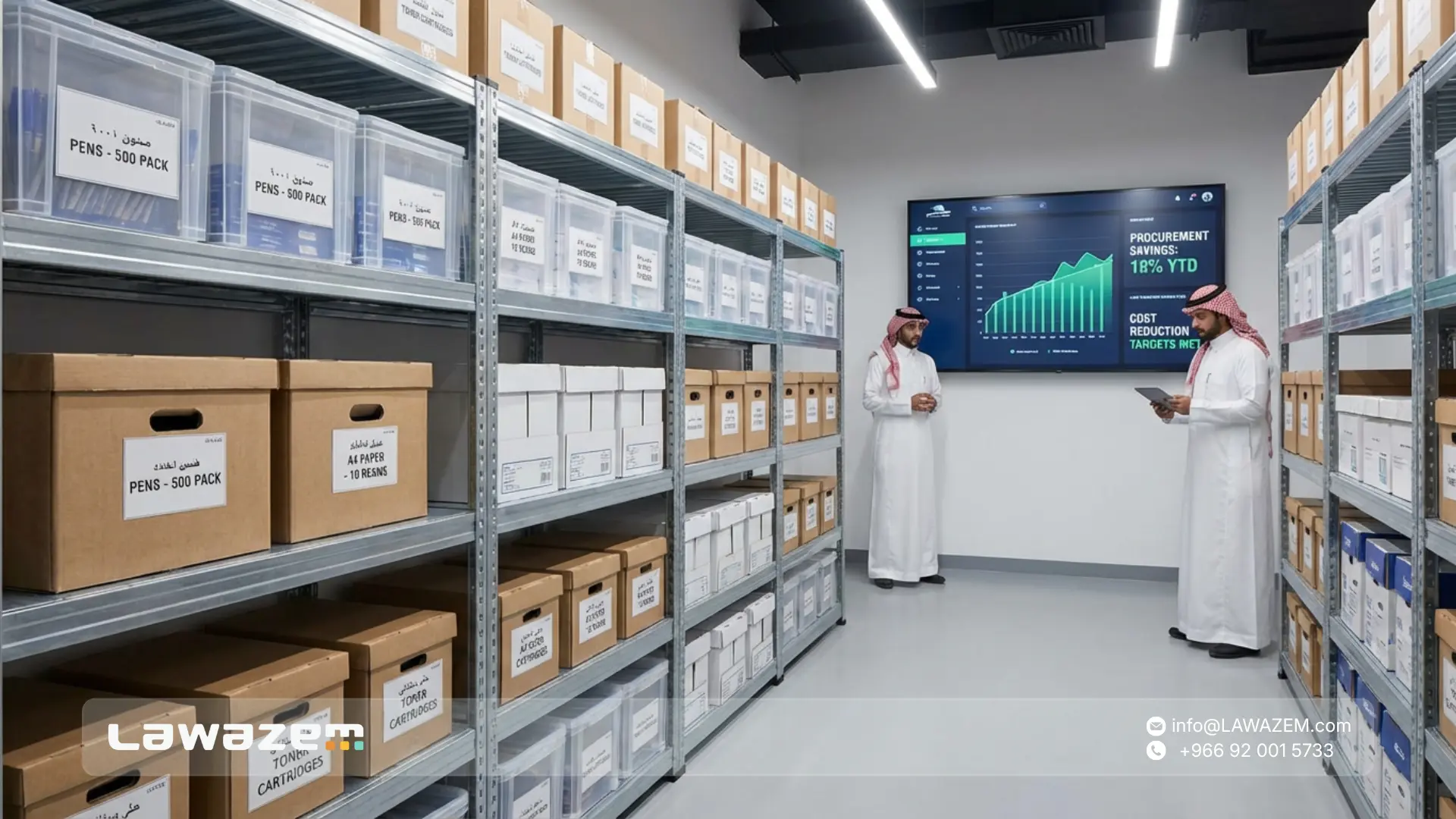
Bulk purchasing can be an effective tool to reduce stationery cost, but it can also become a source of waste if it is not done thoughtfully.
Many companies make the mistake of buying large quantities driven only by discounts, without connecting the decision to actual consumption or storage capacity. Smart bulk buying depends on analysis and balance, not temporary promotions.
When Is Bulk Buying an Economical Option?
Bulk buying is worthwhile when:
-
The item is used daily or almost daily
-
Consumption is stable and predictable
-
The product is not affected by long-term storage
-
The price difference between bulk and retail is clearly meaningful
In these cases, bulk purchasing helps lower unit cost and avoid repeated orders.
Items Suitable for Buying in Quantities
Not every stationery item is suitable for large-quantity purchasing. The most appropriate items include:
-
Printing paper
-
Core pens
-
Files and document holders
-
Daily consumable office essentials
These products have stable usage and low risk of damage, making storage for a reasonable period a safe option.
Risks of Over-Stocking
Excessive stock may lead to:
-
Some products being damaged or losing quality
-
Taking up unnecessary space
-
Forgetting available stock and buying again without need
Freezing budget in unused inventory also reduces a company’s financial flexibility.
Achieving the Balance Between Quantity and Cost
Balance is achieved when you:
-
Link purchased quantities to real consumption rates
-
Define a suitable coverage period (monthly or quarterly)
-
Review inventory before any new purchasing decision
With this approach, the company benefits from lower pricing without falling into the over-storage trap—turning bulk buying into an effective savings tool, not a financial burden.
Reducing Emergency Orders as a Direct Way to Save
Emergency orders are among the biggest reasons behind subtle increases in stationery budgets. Many companies buy only when stock runs out, without realizing that this approach raises cost and removes any planning element from purchasing.
Reducing emergency orders does not require complex solutions; it relies on simple organizational steps that lead to direct, sustainable savings.
Why Emergency Orders Cost More
Emergency orders are often:
-
Higher priced due to urgency
-
Limited in quality or specification options
-
Not easy to compare or negotiate
They also consume employee time in follow-up and coordination, adding an indirect cost to the company.
Setting a Re-Order Point for Each Item
A re-order point is the level at which a new purchase request is issued before stock runs out. Setting it depends on:
-
Daily consumption rate
-
Expected supply lead time
-
A safety buffer to avoid delays
A clear threshold prevents sudden stock-outs and reduces the need for emergency buying.
Scheduling Recurring Orders
Recurring orders, whether monthly or quarterly, help to:
-
Standardize purchasing cycles
-
Stabilize quantities and prices
-
Reduce the number of repeated orders
Scheduling makes buying more consistent and reduces administrative pressure caused by surprise requests.
Linking Orders to Actual Consumption
Connecting purchasing decisions to real usage—rather than estimation or habit—helps to:
-
Determine the right quantities accurately
-
Adjust orders based on changes in employee count
-
Improve planning over time
When ordering is based on real data, stationery shifts from a waste source into a category managed with awareness and control, and savings become a natural result of this organization.
Also Read: Your Complete Guide to Buying Office Supplies for Businesses in Saudi Arabia 2026

Consolidating Stationery Supply Instead of Using Multiple Suppliers
Having multiple stationery suppliers may seem flexible at first, but it often becomes a source of complexity and waste over time. Many companies in Saudi Arabia discover that dealing with more than one supplier raises operating cost and makes budget control harder, while consolidating purchasing through one source creates greater clarity and organization.
Problems with Multiple Suppliers
Working with several suppliers leads to:
-
Different pricing for the same item
-
Inconsistent product quality and specifications
-
Multiple invoices and difficulty tracking them
-
Delays in coordination and follow-up
-
Weak ability to understand the true total spend
These issues make stationery management exhausting and inaccurate.
Benefits of Consolidating Purchases Through One Platform
Consolidating purchasing helps with:
-
Full clarity on orders and inventory
-
Stable specifications and quality
-
Easy re-ordering and follow-up
-
A comprehensive view of consumption and spending
A single platform turns buying from scattered actions into an organized system that can be controlled easily.
Improving Negotiation and Price Control
When purchasing is consolidated, order volume becomes larger and more stable, which:
-
Gives the company stronger negotiating power
-
Helps secure clearer pricing
-
Reduces unit-cost volatility
Negotiation based on unified purchase volume is more effective than scattered small orders.
Reducing Administrative and Accounting Burden
Consolidating suppliers reduces pressure on administrative and finance teams by:
-
Reducing the number of invoices
-
Simplifying payment processes
-
Making financial review and auditing easier
This simplification saves time and effort that can be redirected to more important work, and it makes stationery management a smooth part of daily operations instead of a recurring burden.
Controlling Who Orders—and What Gets Ordered
Lack of control over internal ordering is one of the main reasons stationery budgets inflate and unnecessary requests increase. Many companies struggle with random buying due to the absence of clear policies defining who can order and what can be ordered. Fixing this area delivers direct savings and improves financial discipline.
Defining Purchasing Permissions Inside the Company
Defining who has the authority to request stationery is a fundamental step to reduce chaos. When permissions are clear:
-
Duplicate orders decrease
-
Responsibility becomes easier to track
-
Decision-making becomes more organized
Limiting purchasing to specific people or roles prevents unconsidered spending.
Setting Ordering Policies by Job Role
Departments and roles have different needs, so it is important to link ordering policies to job roles. This means:
-
Allowing specific items for each department
-
Setting suitable quantities based on work nature
-
Blocking access to items unrelated to an employee’s responsibilities
This approach balances meeting needs with controlling spend.
Blocking Unnecessary Items Before Purchase
Many unnecessary orders can be prevented before execution by:
-
Approving predefined item lists
-
Blocking secondary or low-usage products
-
Requiring approval for exception requests
Prevention before purchasing is more effective than fixing waste after it happens.
Reducing Unplanned Orders
When permissions and policies are clear, unplanned orders naturally decrease. This leads to:
-
More stable purchasing
-
Clearer budgeting
-
Fewer emergency orders
Controlling who orders and what they order turns stationery from a difficult-to-control category into an organized process that supports savings and long-term financial stability.
Monitoring Spend and Analyzing Consumption
Stationery budget monitoring and consumption analysis are the two steps that transform stationery management from simply executing orders into data-driven decisions.
Many companies in Saudi Arabia spend significant amounts on stationery without a clear view of how that spending is distributed or why, making waste invisible and difficult to treat.
Tracking Spend by Department
Department-level spend tracking helps to:
-
Understand each department’s needs more accurately
-
Compare consumption across different teams
-
Identify departments exceeding normal levels
This type of tracking makes it easier to allocate budgets fairly and gives leadership clearer visibility into spending points.
Knowing the Highest-Consumption Items
Analyzing order data highlights the most-used items in the company. Knowing these items helps to:
-
Improve quantity planning
-
Identify what is worth buying in bulk
-
Focus on essential products
It also helps detect items purchased frequently without real value.
Detecting Invisible Waste
Waste is not always obvious. Sometimes it appears as:
-
Repeated small orders
-
Items not fully used
-
Buying multiple alternatives for the same product
Consumption analysis uncovers these patterns and allows them to be addressed before they become ongoing cost.
Improving Future Purchasing Decisions
When decisions are based on real data:
-
Quantities become more accurate
-
Emergency orders decrease
-
Budgets improve over time
Regular spend monitoring does not only support savings—it improves purchasing efficiency and makes stationery management a smarter part of the company’s financial planning.
Also read: Buying Office Supplies Online: Steps to Order for Businesses Easily

How Lawazem Helps Save 30% of Stationery Budgets for Saudi Companies
Achieving real savings in stationery budgets does not depend on lowering quality or cutting needs; it depends on improving how purchasing and management are done. In this context, Lawazem plays a central role in helping companies in Saudi Arabia reduce operating costs by up to 30% by organizing purchasing and linking it to planning and data instead of randomness.
One Platform for All Stationery Needs
Lawazem brings all stationery needs into one platform, eliminating the need to work with multiple suppliers and giving companies a unified view of all purchasing activity.
A Wide Catalog That Replaces Multiple Suppliers
The broad catalog provides varied options of core, approved items, making it easier to standardize specifications and prevent duplicate buying or relying on external sources with unstable pricing.
Competitive Pricing Tailored for Businesses
Lawazem offers pricing designed for business needs, helping reduce unit cost and achieve ongoing savings without affecting product quality or supply stability.
Automating Recurring Orders
With recurring-order automation, companies can stabilize quantities and schedule purchasing, reducing emergency orders and ensuring supplies are available at the right time. Create a business account on Lawazem to centralize ordering and controls for your teams.
An Approvals System Before Purchase
The approvals system helps control who orders and what gets ordered, preventing unnecessary requests before they happen—directly reducing waste.
Cost Centers to Control Department Spend
Cost centers allow tracking each department’s spending separately, giving management stronger oversight and enabling corrective decisions when needed.
Organized Invoices That Simplify Accounting
Lawazem provides clear, organized invoices that reduce workload on accounting teams and make financial review and periodic reporting easier.
Spend Analytics for More Accurate Decisions
Through spend reports and analytics, companies can understand consumption patterns, detect invisible waste, and improve future purchasing decisions.
With these integrated tools, Lawazem shifts from being only a stationery supplier to being a practical partner that helps Saudi companies control budgets, improve procurement efficiency, and achieve measurable, sustainable savings—contact Lawazem to request a tailored business quote for your stationery budget.