

Office supplies are only one piece of setting up a startup office—it’s a strategic decision that directly affects the project’s sustainability and its early-stage growth.
In Saudi Arabia, where the startup scene is growing fast and competition is rising, managing your budget intelligently becomes a decisive factor for success. Many companies fall into the trap of overspending on office setup from day one, even though a practical, motivating work environment can be achieved with well-planned costs.
This article is for entrepreneurs and startup owners looking for a practical way to set up an office that meets operational needs without draining financial resources.
We’ll walk through steps and ideas that help you choose only the essentials, avoid waste, and invest in what truly supports productivity—so you can build your office with the smartest budget and keep it ready to scale as your company grows.
Why is budget important when setting up a startup office?
In the early stages of a startup, financial resources are limited, and every spending decision has a direct impact on business continuity. That’s why managing the office budget is a core step that can’t be taken lightly—especially within Saudi Arabia’s expanding entrepreneurial environment, where fast growth requires aware, balanced financial decisions.
The strategic role of budget management
Budget management isn’t just organizing numbers—it’s a strategic tool that helps a startup:
-
Control cash flow from the beginning
-
Avoid unnecessary financial commitments
-
Direct resources toward the activities with the greatest impact on growth
-
Reduce the risks linked to overspending too early
When the budget is clear and well-planned, decisions become easier and more confident, and founders can focus on developing the product or service instead of constant worry about expenses. If you want predictable pricing and better control on office supplies, request a quote from Lawazem.
The office budget as one of the top spending priorities
The office is the team’s daily work environment, and any gap in how it’s equipped can negatively affect productivity and morale. On the other hand, overbuilding the office can consume a large portion of capital without a real return.
So, the office budget should be treated as a calculated priority that aims to:
-
Provide a practical work environment that supports productivity
-
Cover only the essential needs at the beginning
-
Leave financial room for growth and expansion later
A smart approach isn’t extreme cost-cutting or overspending—it’s finding the balance between what the team truly needs and what the budget can support, to ensure a strong, sustainable start.
Also Read: Best Online Office Stationery Store for Businesses: What Should It Offer You?

Identifying the office’s essential needs
Before purchasing anything or committing to any expenses, startups need to define their core office needs precisely. This prevents random decisions and ensures every riyal spent truly serves the business—especially during the early stages for companies in Saudi Arabia.
1- Determine the number of employees and the required space size
Headcount is the first factor that determines the size of the office and how it’s equipped. It’s important to:
-
Define the current team size only, without overestimating early expansion
-
Choose a space that fits the team size and the nature of the work
-
Think about future flexibility instead of renting more space than needed
The right space reduces costs and gives the team a comfortable work environment without unjustified financial pressure.
2- Creating a list of necessities vs. nice-to-haves
One of the most common mistakes is mixing what’s essential with what’s simply an added upgrade. It’s recommended to:
-
Create a list of core needs such as desks, chairs, office stationery, and internet
-
Separate “nice-to-have” items like luxury décor or non-essential devices
-
Postpone anything that doesn’t directly affect day-to-day work
This approach helps direct the budget toward essentials only during the setup phase.
Read also: Top 10 Essential Office Tools to Boost Employee Productivity in 2026

Building a realistic budget for setting up the office
After defining needs, the next step is turning them into clear numbers through a realistic budget that reflects the company’s capabilities and supports sustainability.
1- Estimating fixed vs. variable costs
It’s important to divide expenses into:
-
Fixed costs such as rent, internet, and essential subscriptions
-
Variable costs such as office supplies, maintenance, and operational needs
This split helps you understand monthly commitments and identify the items you can control or reduce when needed.
2- Forecasting revenue and setting a spending cap
The budget shouldn’t be built in isolation from expected revenue. It’s necessary to:
-
Estimate revenue realistically without excessive optimism
-
Set a spending cap that doesn’t harm liquidity
-
Stick to the budget even when there’s pressure to expand quickly
Linking spending to revenue supports stability in the company’s early stages.
3- Setting an emergency reserve
Even with the best planning, unexpected expenses can still happen. It’s recommended to:
-
Allocate part of the budget for emergencies
-
Use this reserve only when necessary
-
Avoid consuming all capital during the setup stage
An emergency reserve gives the startup more flexibility and reduces financial risk, helping it overcome challenges without impacting business continuity.
Also Read: Office Supplies in Jeddah: How to Choose a Supplier That Covers Your Branch Needs?

Core office supplies and how to save on them smartly
Office supplies are one of the budget lines most prone to waste during office setup if they aren’t managed intentionally. Startups in Saudi Arabia need a practical work environment without loading the budget with unnecessary costs—and that happens by choosing only the essentials and adopting a smart purchasing approach from day one.
Essential office needs list
The essential stationery items you can’t operate without include:
-
Daily writing tools
-
Paper and printing supplies
-
Desk organizers and files
-
Basic meeting supplies
-
Cleaning and daily-use items
The focus should be on what truly supports work, while postponing any additions that don’t directly improve productivity.
Cost-saving strategies for supplies
You can reduce stationery supplies costs by:
-
Consolidating purchasing with one supplier
-
Avoiding random or emergency buying
-
Choosing consistent core SKUs instead of unnecessary variety
-
Buying appropriate quantities without excessive stockpiling
These strategies help control spending without affecting the team’s daily needs. To simplify replenishment and pricing for bulk office supplies, explore the LAWAZEM catalog and request tailored pricing when needed.
Organizing the supply stockroom to reduce waste
Even in small offices, organizing supplies matters. Good organization:
-
Prevents duplicate purchases due to not knowing what’s available
-
Reduces damage or loss
-
Makes consumption easier to track
Assigning a clear storage place and a simple person responsible for follow-up noticeably reduces waste.
Furnishing the office on a limited budget
Furniture is essential for team comfort, but it can become a financial burden if it isn’t handled smartly during the setup stage.
Furniture priorities based on critical functions
When choosing furniture, prioritize:
-
Comfortable desks and chairs for employees
-
Basic meeting tables
-
Necessary storage units
As for secondary items like luxury décor or furniture that isn’t used daily, it’s better to postpone them to later stages.
Smart, cost-effective furniture solutions
To reduce cost, you can:
-
Choose practical, multi-use furniture
-
Focus on quality only for the core pieces
-
Avoid buying based on looks or impressions
Smart furniture is what serves the work and supports growth without needing frequent replacement.
Managing daily finances smartly
Managing day-to-day expenses is just as important as the initial plan—it’s what maintains financial balance over time.
Setting up an accounting system early
Starting an accounting system from day one helps:
-
Track expenses accurately
-
Understand real spending categories
-
Avoid financial chaos later
Even simple systems at the beginning make a big difference as the company grows.
Reviewing and adjusting the budget regularly
A budget isn’t a fixed document. It should be:
-
Reviewed monthly or quarterly
-
Adjusted based on changes in revenue or needs
-
Stopping any spending that doesn’t deliver clear value
Regular reviews prevent small mistakes from accumulating and protect financial stability.
Read about: Managers’ Guide: Criteria for Choosing a Reliable Office Supplies Supplier in Saudi Arabia
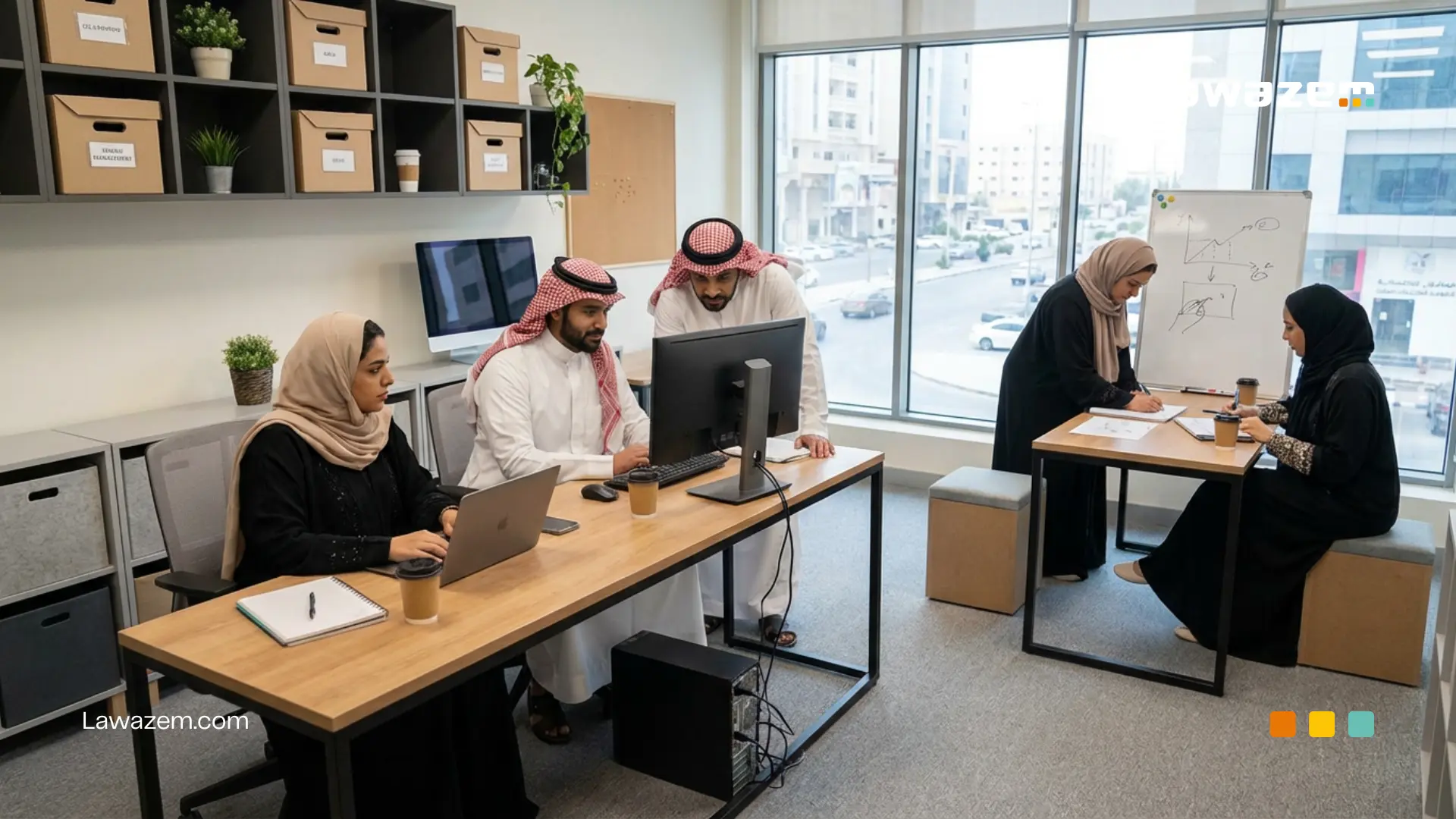
How does Lawazem help startups build a smart office on a planned budget?
During office setup, startups in Saudi Arabia need a partner that understands early-stage challenges and offers practical solutions instead of complicating decisions or scattering the budget.
That’s where Lawazem stands out as an integrated platform that helps businesses order everything they need in office stationery and operational items, with multiple advantages:
1- One platform for all office needs
Lawazem provides a complete catalog that includes core office supplies, productivity tools, office pantry items, and operational furniture—helping startups in Saudi Arabia equip their offices from one source without distraction or dealing with multiple vendors.
2- Thoughtful purchasing with no waste
With clear product options and variety, Lawazem enables companies to buy only what they actually need and tie purchasing decisions to a clear essentials list—aligned with the principle of setting up on a smart budget.
3- Competitive prices that support the budget
Competitive pricing helps control costs from the start, allowing budgets to be directed toward operational priorities instead of being drained by unnecessary purchases.
4- Easy order and approval management
Order and approval tools help control who orders what, preventing random purchasing and reinforcing financial discipline during the setup stage. Create a business account with Lawazem to set approval workflows that match your procurement process.
5- Invoices and reports that support early financial tracking
Lawazem provides organized invoices and clear reports that help startups track expenses, manage the budget, and build a structured financial system from day one.
6- Flexibility that supports future growth
As the company grows and needs change, Lawazem offers flexibility in adjusting orders and scheduling purchases—supporting gradual expansion without sudden financial pressure.
In this way, Lawazem becomes a practical tool for executing smart office setup strategies and a real support for startups in Saudi Arabia to build an efficient, scalable work environment.
Common office setup budget mistakes—and how to avoid them
Overspending on setup too early
One of the most common mistakes is spending heavily on the office from the start, such as:
-
Space larger than needed
-
Furniture or equipment that isn’t used
-
“Looks-based” expenses that don’t support work
The solution is to build gradually and connect any expansion to real need and real growth.
Not planning for emergencies
Ignoring an emergency reserve can put the company under sudden financial pressure. Any unexpected cost without preparation can affect:
-
Salaries
-
Daily operations
-
Business continuity
Emergency planning—even with a modest amount—gives the startup flexibility and security in its early stages and significantly reduces risk. When you’re ready to keep office supplies spending controlled from day one, contact Lawazem.