
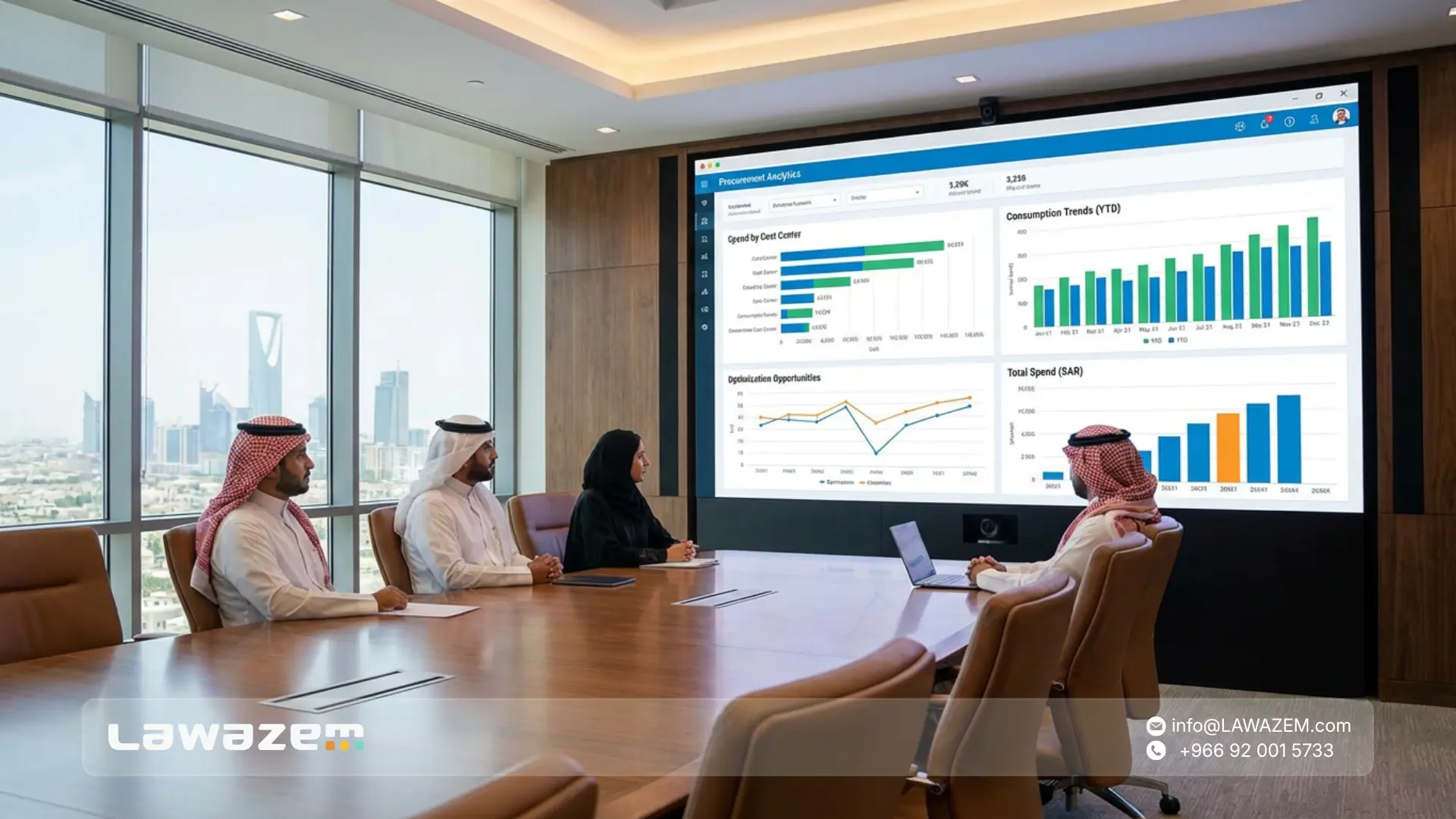
Organizations in Saudi Arabia are experiencing an accelerated shift toward digitalization across all business operations, and digital procurement services management is no longer an exception.
Reliance on manual procedures, unstructured requests, and multiple approval layers has become an operational burden that consumes time, increases costs, and limits organizations’ ability to make accurate and fast decisions.
In this article, we review how digital transformation contributes to developing digital procurement services, and how Lawazem supports organizations in applying this transformation in practice through a smart platform that unifies purchasing, organizes approvals, and turns procurement from an administrative burden into a tool that supports growth and sustainability.
What Are the Benefits of digital procurement services?
Adopting digital procurement services solutions in procurement directly impacts work efficiency and operational stability, and gives organizations greater control and stronger decision-making capabilities.
1- Increased Operational Efficiency
digital procurement services systems shorten the time required to execute requests and approvals and reduce manual intervention in repetitive processes. This leads to:
-
Faster purchasing cycles
-
Reduced routine procedures
-
Improved productivity of administrative teams
When procurement becomes automated, focus shifts from daily follow-up to planning and continuous improvement.
2- Improved Spend Control and Transparency
digital procurement services provides clear visibility across all purchasing and spending operations. Through reports and dashboards, organizations can:
-
Track spending by departments or branches
-
Monitor budget compliance
-
Enhance transparency and accountability
Clear data limits unjustified spending and supports accurate financial decision-making.
3- Reduced Errors and Waste
Automation reduces reliance on manual data entry, which limits human errors such as:
-
Duplicate requests
-
Ordering non-approved items
-
Executing unplanned purchases
It also helps identify waste early and address it before it becomes an ongoing cost, making procurement more disciplined and efficient over the long term.
Also Read: Best Wholesale Office Supplies Suppliers in KSA: Selection Criteria Before Contracting

What Does Order Automation Mean in Procurement?
Order automation in digital procurement services means transforming purchasing processes from manual steps that depend on individual communication and traditional approvals into organized digital procedures managed through a single system.
This includes creating requests, reviewing them, approving them, executing them, and tracking them automatically according to predefined policies. This approach helps organizations in Saudi Arabia reduce the time and effort required to manage procurement and ensures that requests are executed faster, with greater accuracy and transparency.
Stages of Implementing digital procurement services and Order Automation
Successful digital transformation in procurement does not occur all at once, but rather through clear stages that ensure stability and ease of adoption within the organization.
1- Assessing the Current Situation
The first step is understanding the current reality of procurement operations, including:
-
The method of submitting requests
-
The number of required approvals
-
Points of delay and recurring errors
This assessment identifies weaknesses that need to be addressed.
2- Setting Clear Objectives
After assessment, digital transformation objectives are defined, such as:
-
Reducing purchasing cycle time
-
Improving spend control
-
Increasing transparency
Clear objectives help measure success later and guide the implementation process.
3- Choosing the Right Tools
Selecting a platform or system that meets the organization’s needs is a critical step. The right tool should:
-
Support order and approval automation
-
Be easy to use
-
Be scalable as the organization grows
The right choice reduces challenges in later stages.
4- Gradual Implementation and Training
Gradual implementation reduces resistance to change. It is preferable to start with selected departments and expand later. Continuous training ensures:
-
Users understand the system
-
The system is used correctly
-
Errors are reduced in early stages
5- Performance Measurement and Continuous Improvement
After implementation, performance should be monitored through:
-
Measuring request execution time
-
Analyzing approval and rejection rates
-
Reviewing costs and budget compliance
Continuous improvement ensures that digital procurement services does not stop at implementation, but continues to evolve with the organization’s needs.
Also Read: Bulk Office Tools and Supplies Buying Guide for Companies and Institutions in Saudi Arabia

Lawazem’s Office Supplies Platform: digital procurement services & Order Automation
In the digital procurement journey, organizations need more than just a purchasing tool. They need a platform that unifies operations, enforces policies, and turns requests into a clear, measurable digital process.
Here, Lawazem’s office supplies platform plays a practical role in supporting organizations in Saudi Arabia in applying order automation and controlling procurement efficiently and sustainably.
1- A Unified Platform for Process Control
Lawazem provides a centralized environment to manage all office supplies purchasing operations, giving organizations comprehensive visibility over all requests, approvals, and spending in one place, and eliminating fragmentation caused by multiple systems or manual approaches.
2- Workflow Automation
Lawazem supports full workflow automation, from request creation through approvals to purchase execution. This reduces manual intervention, accelerates request cycles, and ensures compliance with approved policies without the need for constant follow-up.
3- Integration with Other Enterprise Systems
The ability to integrate with financial or operational systems within the organization strengthens digital transformation, making procurement a connected part of the enterprise ecosystem rather than a separate process that is difficult to link with other data.
4- Improving Purchasing Decisions Through Analytics
Lawazem provides detailed spending analytics and reports that help decision-makers:
-
Understand purchasing patterns
-
Identify sources of waste
-
Improve future planning
Data-driven decisions enhance purchasing efficiency and support financial sustainability.
5- Reducing Errors and Standardizing Policies
Through this integrated role, Lawazem becomes more than an office supplies platform; it becomes a digital partner supporting Saudi organizations in building a smart, organized, and scalable procurement system.
Through this integrated role, Lawazem becomes more than an office supplies purchasing platform; it becomes a digital partner supporting Saudi organizations in building a smart, organized, and scalable procurement system.
Also Read: Office Supplies in Dammam: Buying Office Supplies in Bulk Without Waste

Best Practices for Successful digital procurement services Transformation & Order Automation
The success of digital transformation in procurement does not depend on technology alone, but also on how it is applied within the organization. Following clear practices from the beginning helps companies in KSA achieve maximum benefit from automation and reduce risks associated with change.
1- Involving Internal Teams
Involving relevant teams from the early stages of digital transformation increases acceptance and reduces resistance to change. When employees understand the reason for the transformation and its benefits, they become part of the solution rather than an obstacle.
2- Continuous User Training
Training is not a temporary phase, but an ongoing process. Training helps users:
-
Use systems efficiently
-
Reduce operational errors
-
Benefit from all automation features
The better users understand the system, the faster adoption becomes and the higher the quality of results.
3- Regular Review and Update of Procedures
Digital transformation does not mean fixing procedures forever. Regular review of policies and workflows helps:
-
Improve performance
-
Address gaps
-
Keep pace with changes in workload or organizational structure
Flexibility in updates is a core requirement for long-term automation success.
Digital Transformation Challenges & Corporate Order Automation
Despite the significant benefits, organizations face natural challenges during digital transformation. Addressing them with awareness reduces their impact and ensures sustainable success.
1- Addressing Resistance to Change: Leadership & Management Support
Resistance to change often stems from fear of the unknown or loss of control. Clear leadership and effective management support help:
-
Clarify vision and objectives
-
Reassure teams about their roles in the new system
-
Enforce positive commitment to change
Support from senior management is a decisive factor in the success of any digital initiative.
2- Legacy & Non-Compatible Systems: Flexible Integration Strategies
Many organizations operate legacy systems that are difficult to replace immediately. The solution lies in:
-
Adopting flexible, integration-ready platforms
-
Implementing transformation gradually
-
Connecting systems instead of eliminating them abruptly
This approach reduces risk and preserves operational stability.
3- Protecting Data and Ensuring Security During Digital Transformation
With digitalization, data protection becomes a top priority. To ensure security, organizations must:
-
Use reliable systems
-
Define access permissions carefully
-
Monitor operations continuously
Strengthening digital security protects organizations from risk and enhances trust in new systems.
By following these practices and addressing challenges thoughtfully, organizations can achieve successful digital transformation in procurement and turn order automation into a strength that supports efficiency and sustainability.
ِAlso Read: Your Complete Guide to Buying Office Supplies for Businesses in Saudi Arabia 2026

FAQ About digital procurement services in KSA
1. What Is Digital Transformation in Procurement?
Digital transformation in procurement is the shift of organizations from manual and traditional purchasing methods to integrated digital systems managed through electronic platforms.
It includes automating purchase requests, organizing approvals, tracking spending, and analyzing data, enabling faster, more accurate, and more transparent procurement management within organizations in Saudi Arabia.
2. Why Do Organizations Need digital procurement services in Procurement Operations?
Organizations need digital transformation because traditional methods are no longer able to keep pace with the scale and complexity of operations. Digital transformation helps to:
-
Reduce purchasing cycle time
-
Control spending and prevent waste
-
Raise transparency and accountability
-
Improve decision-making based on real data
3. What Is the Difference Between Traditional Purchasing and digital procurement services?
Traditional purchasing relies on manual procedures, paper-based or unstructured approvals, and multiple parties, often leading to slow execution and limited visibility.
Digital procurement relies on unified systems that allow electronic request creation, automated approvals based on predefined policies, and real-time tracking of requests and spending.
The fundamental difference is the shift from reactive execution to data-driven planning and control.
4. What Are the Main Benefits of Adopting digital procurement services?
-
Increased operational efficiency and faster purchasing cycles
-
Improved budget and spend control
-
Reduced human errors and unnecessary requests
-
Unified policies and procedures across the organization
-
Support for decision-making through accurate reports and analytics
Contact Lawazem today to start building a smarter, more controlled, and sustainable procurement operation.